
Textile Process Equipment
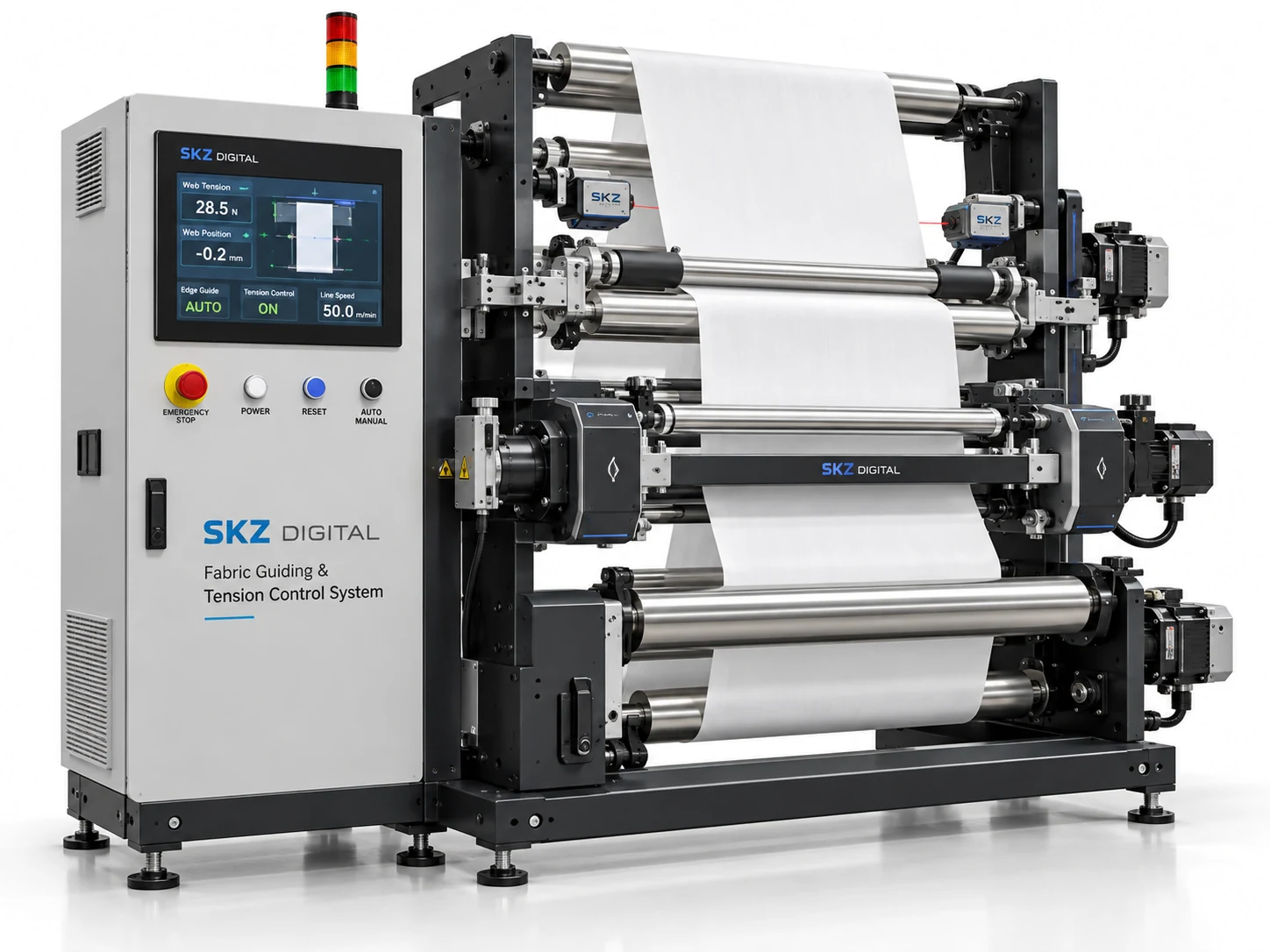
Fabric Guiding & Tension Control System
A fabric guiding and tension control system keeps the fabric centred and running at a balanced tension through the line. It works to reduce drift, creasing and unwanted stretching.
01 / About the System
What is Fabric Guiding & Tension Control System
Guiding senses the position of the fabric edge and steers the fabric back toward the line axis. If the fabric drifts sideways while passing through the line, print, padding or steaming quality can suffer.
Tension control aims to keep the fabric moving along the line without over-stretching or slackening. On knitted and stretch fabrics in particular, tension decides dimensions and appearance.
These systems are usually placed at specific points in the line: before printing, at the entry of wet processes or at transitions between machines. Position and number are set by the line layout and the fabric.
02 / Applications
Areas of use
- 01
Before printing
Centring the fabric and keeping tension balanced at the printer entry.
- 02
Stretch and delicate fabrics
Managing tension-related dimension problems on knitted or stretch fabrics.
- 03
Wet process entries
Aligning the fabric before padding, steaming or washing.
- 04
Line transitions
Carrying the fabric cleanly through transitions between machines.
The need for guiding and tension control is assessed according to the fabric type and its position in the line.
03 / System Structure
Process flow
- 01Edge Sensing
Edge sensing
Sensors follow the position of the fabric edge.
- 02Guiding
Guiding
The fabric is steered back to the line axis according to the drift detected.
- 03Tension Sensing
Tension sensing
The tension of the fabric in the line is monitored.
- 04Tension Control
Tension control
Tension is corrected to stay within the target range.
The tension target and the correction sensitivity vary with the fabric and the machine it is connected to.
04 / Process
Supply and Commissioning Process
Guiding and tension control is considered together with the point in the line where it will be placed. Once the fabric type and the neighbouring machines are clear, supply, installation and commissioning are planned.
- 01
Needs assessment
The fabric types, the line layout and the point where the system will be placed are identified.
- 02
System configuration
The guiding and tension control units are defined according to their position and the machine they connect to.
- 03
Supply
It is clarified whether the supply scope covers only this system or also other feeding equipment in the line.
- 04
Installation
The position of the system in the line and its connection layout with neighbouring machines are addressed in the installation plan.
- 05
Commissioning
In trials with fabric, alignment and tension behaviour are assessed together at different speeds.
- 06
Technical support
After commissioning, a technical service request can be created for alignment or tension issues.