
Textile Process Equipment
Vertical Fabric Accumulator / Tension Compensator
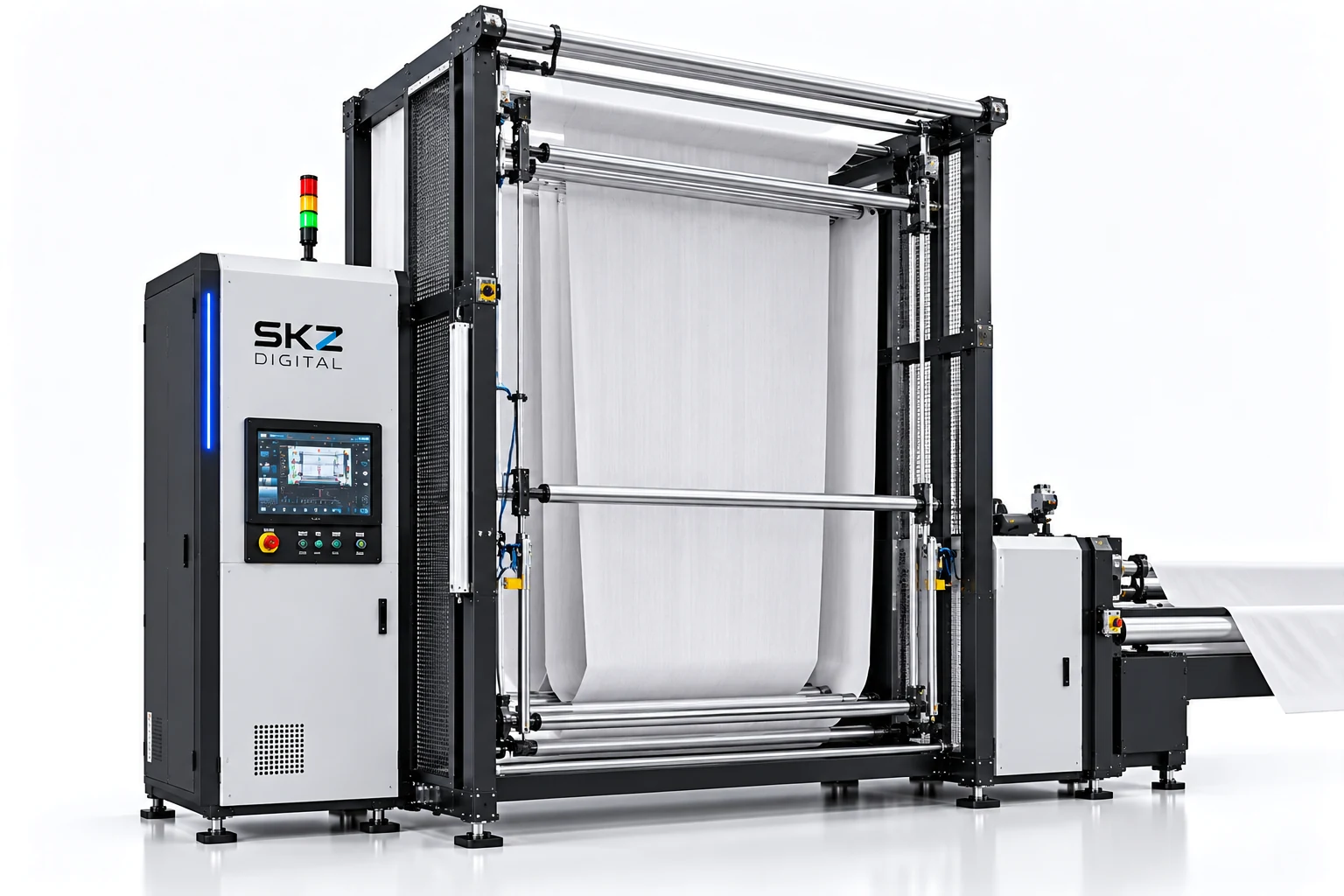
A vertical fabric accumulator stores fabric in vertical loops inside a tower and balances tension. Its vertical design aims at using floor space efficiently.
01 / About the System
What is Vertical Fabric Accumulator / Tension Compensator
In the tower the fabric runs so as to form vertical loops between lower and upper rollers. As the number of loops changes, so does the length of fabric stored.
This change in fabric length absorbs the difference between input and output speed and helps balance tension fluctuations in the line.
The vertical design aims at using floor space more efficiently where ceiling height allows. Tower height and storage arrangement are set by the needs of the line.
02 / Applications
Areas of use
- 01
Limited floor space
Intermediate storage in line layouts with no room for horizontal storage.
- 02
Stop-and-go sections
A buffer between a section that runs intermittently and one that runs continuously.
- 03
Tension isolation
Limiting the passing of tension changes from one section of the line to the next.
- 04
Linking sections
Balancing fabric flow between printing, pre-treatment or wet process sections.
Tower height and loop arrangement are assessed against site conditions and the fabric type.
03 / System Structure
Process flow
- 01Fabric In
Fabric in
The fabric is taken in at the entry of the tower.
- 02Vertical Loop Storage
Vertical loop storage
The fabric builds up by forming vertical loops between rollers.
- 03Tension Compensation
Tension compensation
The loop length changes to balance tension and speed differences.
- 04Fabric Out
Fabric out
The fabric is fed to the next machine at a balanced tension.
Storage length and tension behaviour vary with the fabric and the line speed.
04 / Process
Supply and Commissioning Process
For a vertical accumulator, tower height is assessed together with the ceiling and floor conditions of the site. Once these are clear, supply, installation and commissioning steps are planned.
- 01
Needs assessment
The site height and floor area, the fabric types and the line sections to be connected are identified.
- 02
System configuration
The tower height, the loop arrangement and the tension compensation structure are defined according to the needs of the line.
- 03
Supply
It is clarified whether the supply scope covers only the tower or also connection and control equipment.
- 04
Installation
The tower height, its floor placement and the fabric entry and exit connections are addressed in the installation plan.
- 05
Commissioning
In trials with fabric, loop storage and tension compensation behaviour are assessed together.
- 06
Technical support
After commissioning, a technical service request can be created for tension or fabric flow issues.