
Printing Systems
Reactive Textile
A reactive textile printing system prints with reactive ink on cellulosic fibres such as cotton, linen and viscose. Fixation is completed by steaming and then washing; the line layout is planned according to the fabric.
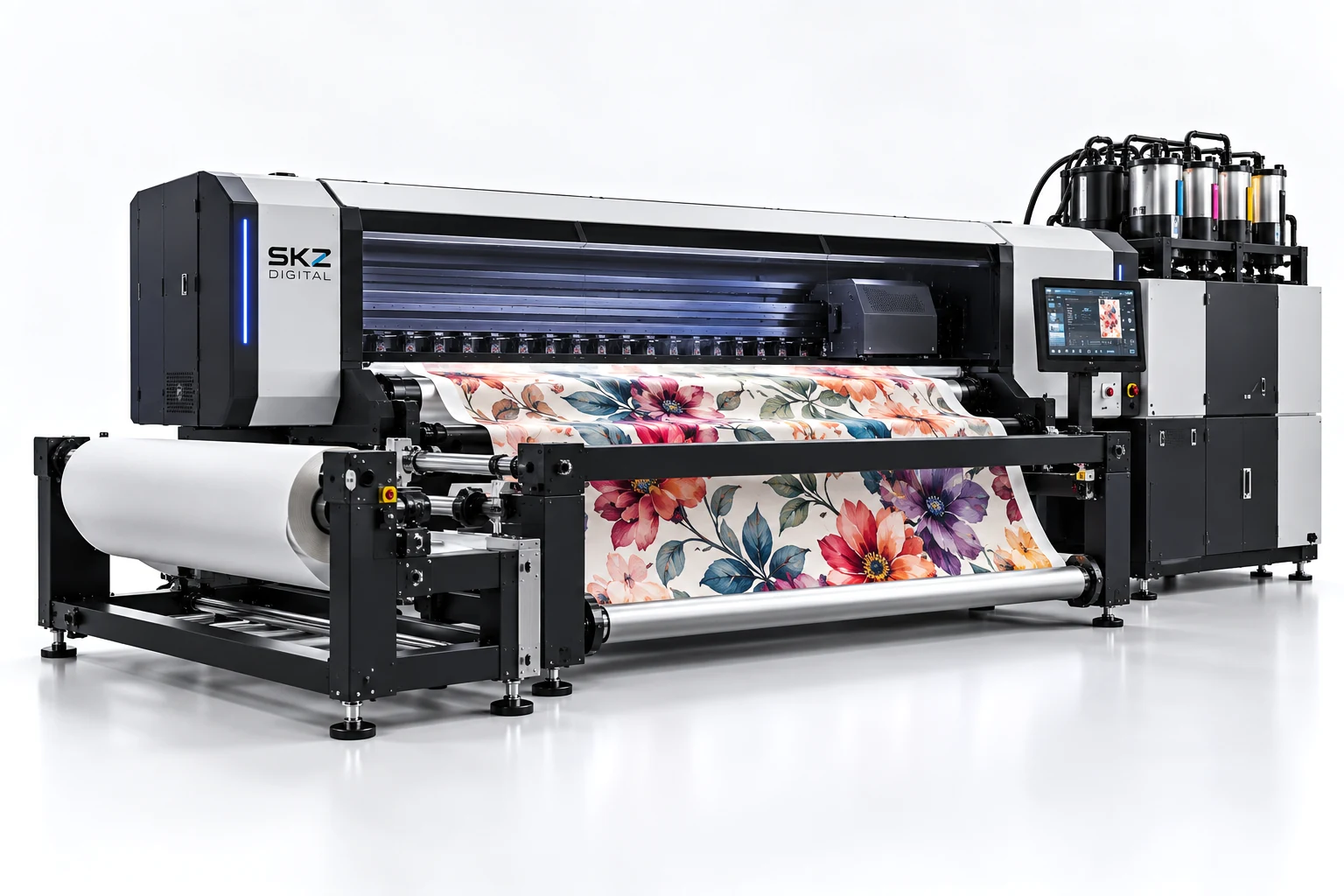
01 / About the System
What is Reactive Textile
Reactive inks fix by forming a chemical bond with cellulosic fibres. This bond makes the colour part of the fibre; the method is preferred on fibres such as cotton, linen and viscose.
Before printing, the fabric is given a pre-treatment that supports the reaction of the reactive dye with the fibre and the sharpness of the print. The pre-treatment chemicals and application conditions are set by the fabric and the ink series.
After printing, steaming completes the colour bonding and washing removes the unbonded dye. These steps are the main factor in line planning for reactive systems.
02 / Applications
Areas of use
- 01
Cotton fabrics
Pattern printing on fashion and apparel fabrics.
- 02
Viscose and linen
Printing applications on viscose and linen-based fabrics.
- 03
Home textiles
Cellulosic products such as bed linen, tablecloths and decorative fabric.
- 04
Scarves and shawls
Scarf and accessory prints on fine cellulosic fabrics.
Cellulosic fibre type, pre-treatment and colour yield after steaming are confirmed with a test print for each fabric.
03 / System Structure
Process flow
- 01Pre-Treatment
Pre-treatment
A pre-treatment that supports the reactive dye reaction is applied to the fabric.
- 02Printer
Printing
The pattern is printed onto the fabric with reactive ink.
- 03Steaming
Steaming
Under steam, the dye forms a chemical bond with the fibre.
- 04Washing
Washing
Unbonded dye and chemicals are washed out.
Pre-treatment chemicals, steaming time and washing conditions vary with the fabric and the ink series.
04 / Process
Supply and Commissioning Process
In a reactive system the investment is not limited to the printer; pre-treatment, steaming and washing steps are part of the line design. Which of these steps already exist is the starting point of the supply and installation plan.
- 01
Needs assessment
The target cellulosic fabrics, the product group and the current state of the pre-treatment, steaming and washing steps are identified.
- 02
System configuration
The printer, the pre-treatment, steaming and washing capability and the consumables are defined according to the fabric type.
- 03
Supply
It is clarified whether the supply scope covers only the printer or also the pre-treatment, steaming and washing equipment.
- 04
Installation
The water, steam and waste water requirements of the line are addressed in the installation plan.
- 05
Commissioning
Test prints are assessed together for colour yield and fastness after steaming and washing.
- 06
Technical support
If colour yield or fastness results drift after commissioning, a technical service request can be created.
05 / Related Ink
TrueHue Reactive Textile inks
The reactive ink for this system can be selected from the TrueHue Reactive Textile family. Compatibility is not determined by the ink alone; the machine configuration, the print head, the fabric pre-treatment and the steaming conditions are assessed together.